
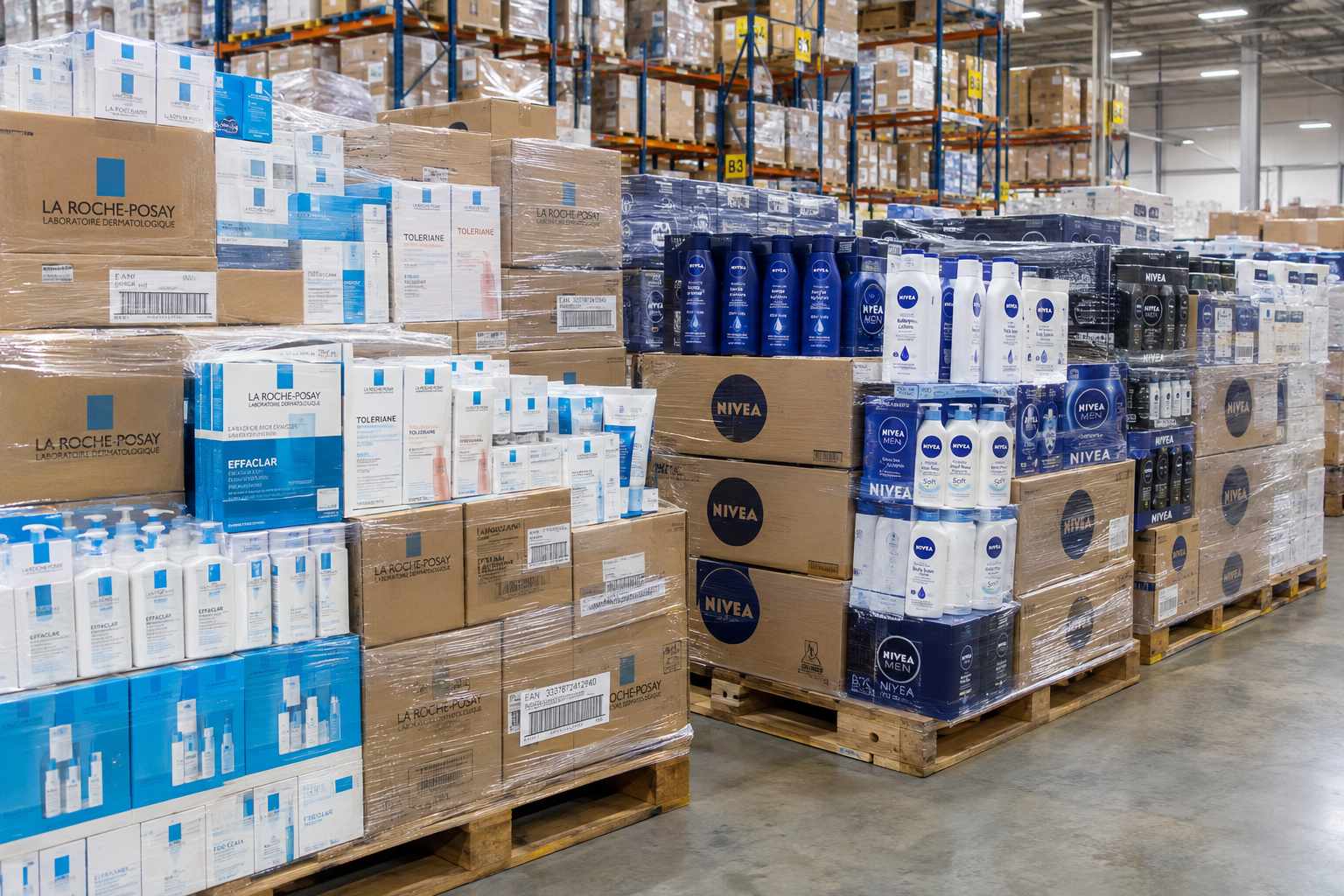
How Can I Find a Reliable La Roche-Posay Wholesale Supplier? Europe Import & Buying Guide
How Can I Find a Reliable La Roche-Posay Wholesale Supplier?
Finding a reliable La Roche-Posay wholesale supplier is an important step for European importers, wholesalers, distributors, Suppliers, pharmacies, beauty retailers, online stores, and other businesses that want to source skincare products in commercial quantities. La Roche-Posay is widely associated with dermatological skincare, sensitive-skin solutions, cleansers, moisturizers, sunscreens, acne-care products, and other personal-care categories, making the brand relevant to multiple retail channels. How Can I Find A Reliable La Roche-Posay Wholesale Supplier
However, buying La Roche-Posay products wholesale is not simply a matter of finding the lowest quoted price. European buyers need to consider supplier reliability, product authenticity, available product ranges, batch information, shelf life, packaging, minimum order quantities, shipping terms, documentation, market requirements, and the intended sales channel.
For importers, a successful purchase begins with supplier verification and continues through product selection, commercial negotiation, logistics, documentation, customs clearance, storage, and resale.
This guide explains how to find a reliable La Roche-Posay wholesale supplier, where European businesses can look for wholesale opportunities, what to ask before placing an order, and which factors should be checked before importing skincare products internationally.
Why La Roche-Posay Is Relevant to Wholesale Skincare Buyers
La Roche-Posay occupies an important position within the skincare market because its product portfolio is closely associated with dermatological skincare and sensitive-skin needs. This gives wholesalers opportunities to serve pharmacies, specialist skincare retailers, beauty stores, e-commerce businesses, distributors, and other professional buyers.
A wholesale buyer may be interested in several product categories, including:
- Facial cleansers
- Moisturizers
- Face creams
- Sunscreens
- Acne and blemish-care products
- Sensitive-skin products
- Body-care products
- Lip-care products
- Anti-aging skincare
- Dermatological skincare
- Products designed for dry or irritated skin
- Cleansing and hygiene products
The exact assortment available to a wholesale buyer can vary by supplier, market, packaging format, stock position, and distribution channel. How Can I Find A Reliable La Roche-Posay Wholesale Supplier
For this reason, European importers should avoid assuming that every supplier carries the same products. Instead, buyers should prepare a specific purchasing list containing the product names, sizes, variants, target quantities, and desired delivery market.
Businesses looking to expand beyond La Roche-Posay can also investigate complementary skincare brands and categories through SKINCAREBYSHAYV LLC.
How Can I Find a Reliable La Roche-Posay Wholesale Supplier?
The first step is to establish a supplier-verification process rather than choosing a supplier based only on price.
A reliable supplier should be able to provide commercially useful information about the products being offered and explain the purchasing process clearly. Depending on the transaction, buyers may need information such as product descriptions, pack sizes, quantities, batch information, best-before or expiry information where applicable, country of origin, packaging details, commercial terms, shipping arrangements, and available documentation.
1. Check the Supplier’s Business Information
Before negotiating a large La Roche-Posay order, check the supplier’s business identity.
Useful information can include:
- Legal company name
- Business address
- Company registration information
- Contact details
- Professional website
- Sales contact
- Invoicing information
- Export experience
- Wholesale product categories
- Commercial references where appropriate
A supplier that provides clear business information is easier to evaluate than a seller that only communicates through informal messaging channels.
For larger transactions, buyers should ensure that the name appearing on quotations, invoices, payment instructions, shipping documents, and other commercial paperwork is consistent. How Can I Find A Reliable La Roche-Posay Wholesale Supplier
2. Ask for a Current Product List
A wholesale skincare supplier may carry many products, but stock can change frequently.
Ask for a current product list showing:
- Product name
- Product size
- Variant
- Units per carton
- Available quantity
- Batch information where relevant
- Expiry or best-before information where applicable
- Country of origin
- Price
- Minimum order quantity
- Packaging format
A current stock list is particularly important when buying mixed cartons or pallet quantities.
3. Confirm Product Authenticity and Supply Chain Information
Authenticity is a major consideration when sourcing internationally recognized skincare brands.
A buyer should ask the supplier how the products are sourced and request commercially appropriate documentation supporting the transaction.
Questions can include:
- Where were the products sourced?
- What market were they originally supplied for?
- Are the products genuine branded products?
- Are original retail packages supplied?
- Are cartons factory sealed where applicable?
- Can batch information be provided?
- Can photographs of the actual stock be supplied?
- Is the available stock from a consistent batch or mixed batches?
The answers should be considered together rather than individually.
4. Request Actual Stock Information
There is a major difference between a supplier offering a product in theory and a supplier having the quantity physically available.
For a large purchase, ask whether the products are:
- In stock
- Available through a regular supply channel
- Available by pre-order
- Available in mixed batches
- Available by carton
- Available by pallet
- Available for container shipment
If the order is time-sensitive, confirm stock availability immediately before making payment.
5. Compare More Than the Unit Price
A quotation of €X per unit does not necessarily represent the total purchasing cost.
A European importer should consider:
Total landed cost = Product cost + inland transport + international freight + insurance where applicable + customs-related charges + duties/taxes where applicable + handling + warehousing + other transaction costs
Two suppliers with apparently different prices may produce very different landed costs.
For example, a supplier offering a slightly higher unit price but better carton configuration, lower minimum order quantity, stronger documentation, and more efficient freight options may produce a commercially different result from a supplier offering a lower unit price.
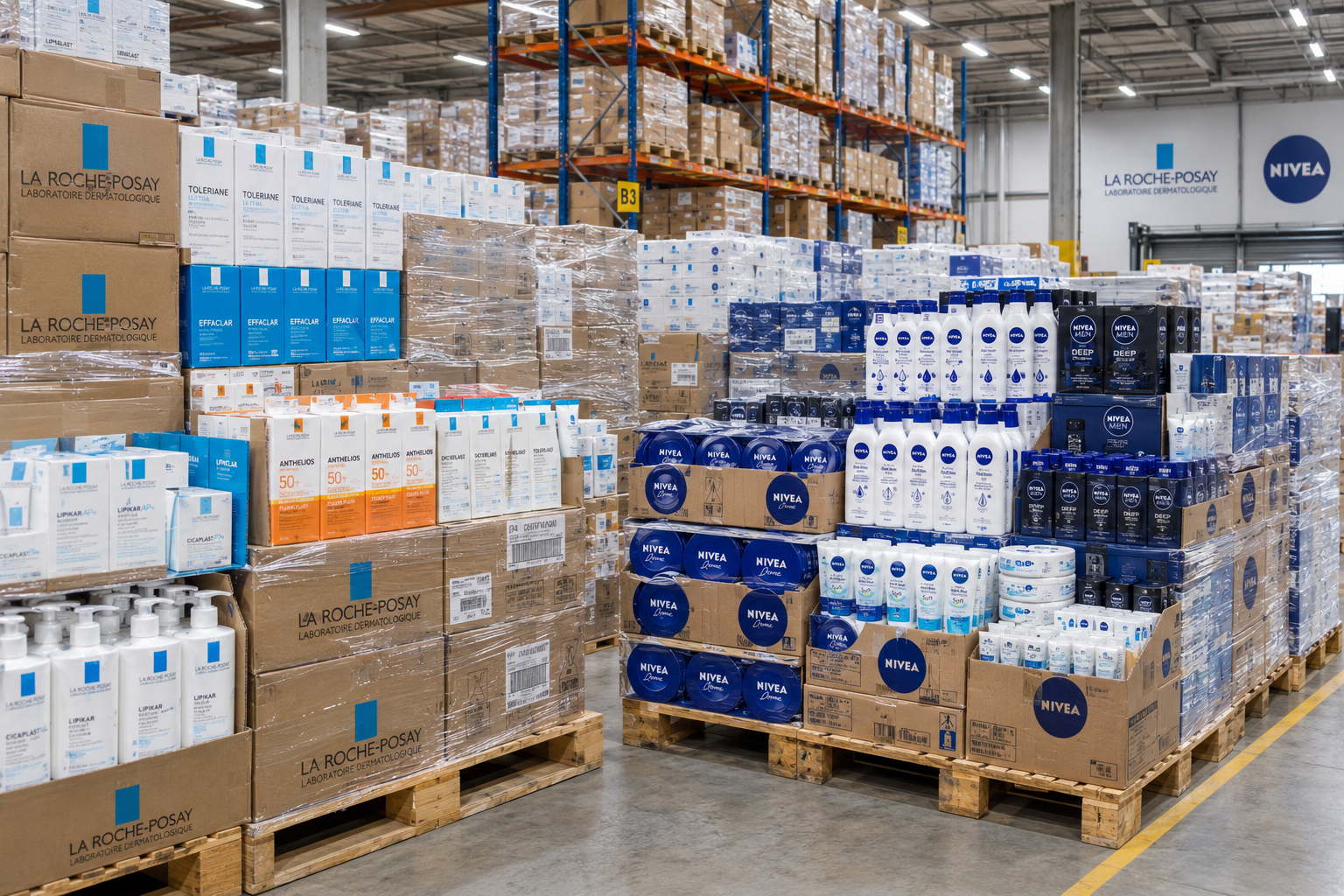
Where Can I Buy La Roche-Posay Wholesale in Europe?
European buyers can explore several sourcing channels depending on their business model and intended market.
Possible channels include:
- European wholesale distributors
- International skincare wholesalers
- Authorized distribution channels
- Professional beauty distributors
- Pharmaceutical and pharmacy-oriented suppliers
- Export wholesalers
- Stock distributors
- B2B skincare suppliers
- International trading companies
The appropriate channel depends on whether the buyer wants domestic European supply, cross-border European purchasing, or international importation.
A buyer should also distinguish between buying from a supplier located in Europe and buying products intended for the European market. These are not necessarily the same thing.
A supplier may be located in Europe while offering products originally packaged for another market. Therefore, product-market compatibility and regulatory requirements should be examined before placing an order.
La Roche-Posay Wholesale Europe: What Should Importers Check?
When sourcing La Roche-Posay wholesale for Europe, buyers should evaluate both the supplier and the products.
Important considerations include:
Product Selection
Determine exactly which La Roche-Posay products are required.
Instead of asking simply for “La Roche-Posay wholesale,” provide a purchasing list such as:
- Product name
- Product size
- Number of units
- Number of cartons
- Preferred batch
- Minimum remaining shelf life
- Destination country
This allows the supplier to prepare a more precise quotation.
Carton Configuration
Carton configuration affects freight calculations and warehouse planning.
Ask:
- How many units are in one carton?
- What are the carton dimensions?
- What is the gross carton weight?
- How many cartons fit on one pallet?
- What is the pallet height?
- What is the gross pallet weight?
- Are cartons mixed or single-product?
- Are pallets stretch-wrapped?
Do not assume that all products have the same carton quantity.
Pallet Configuration
For larger orders, pallet information becomes especially important.
A buyer should request:
Units per carton → cartons per layer → layers per pallet → cartons per pallet → units per pallet → gross pallet weight
This information can help importers estimate warehouse requirements and freight costs.
Minimum Order Quantity
MOQ can be expressed in different ways:
- Minimum units
- Minimum cartons
- Minimum cases
- Minimum pallets
- Minimum order value
A supplier may have different MOQs for different products.
If you are a small retailer, ask whether mixed cartons or mixed pallets are possible. If you are an established distributor, ask about pallet and container pricing.
What Should I Ask a La Roche-Posay Wholesale Supplier Before Importing?
Before confirming a commercial order, prepare a supplier questionnaire.
Useful questions include:
- What La Roche-Posay products are currently available?
- What sizes and variants are available?
- What is the minimum order quantity?
- What is the price per unit?
- What is the price per carton?
- How many units are packed in each carton?
- How many cartons are packed on each pallet?
- What is the pallet weight?
- What is the country of origin?
- What is the remaining shelf life?
- Can batch information be provided?
- Are products supplied in original packaging?
- Can actual-stock photographs be provided?
- What Incoterms are available?
- What is the estimated preparation time?
- What shipping options are available?
- What documents accompany the shipment?
- Which destination countries can the supplier serve?
- Are mixed products permitted?
- What payment terms are available?
The purpose of these questions is not simply to gather information. It is to make quotations comparable.
How to Compare La Roche-Posay Wholesale Suppliers
Create a supplier comparison sheet before making a large purchase.
A practical comparison can include:
| Factor | Supplier A | Supplier B | Supplier C |
|---|---|---|---|
| Unit price | Check | Check | Check |
| MOQ | Check | Check | Check |
| Carton quantity | Check | Check | Check |
| Pallet quantity | Check | Check | Check |
| Remaining shelf life | Check | Check | Check |
| Batch information | Check | Check | Check |
| Origin | Check | Check | Check |
| Documentation | Check | Check | Check |
| Freight terms | Check | Check | Check |
| Payment terms | Check | Check | Check |
| Lead time | Check | Check | Check |
| Stock availability | Check | Check | Check |
This approach helps buyers avoid focusing exclusively on the headline price.
How to Import La Roche-Posay Products into Europe
Importing skincare products into Europe involves more than arranging transportation.
The exact requirements depend on factors such as:
- Destination country
- Product classification
- Product formulation
- Intended use
- Product claims
- Packaging
- Country of origin
- Whether the products are already placed on the EU market
- Importer status
- Sales channel
European importers should confirm applicable requirements with the relevant authorities and qualified regulatory professionals before commercial importation.
Step 1: Identify the Exact Products
Prepare a detailed product list.
For every product, record:
- Brand
- Product name
- Size
- Variant
- Quantity
- Intended sales market
- Supplier
- Country of origin
- Batch information
- Shelf-life information where relevant
Step 2: Determine the Applicable Product Requirements
Skincare products can fall under specific European regulatory frameworks depending on their composition, intended purpose, presentation, and claims.
Importers should verify the applicable requirements for each product rather than assuming that every skincare product is treated identically.
This is particularly important for products marketed with specific dermatological, therapeutic, protective, or functional claims.
Step 3: Verify Label and Packaging Requirements
Before importing commercial quantities, examine the packaging.
Check whether required information is appropriately presented for the destination market.
Potential information may include:
- Product identity
- Ingredients
- Responsible-party information where applicable
- Quantity
- Usage instructions
- Precautions
- Batch information
- Durability or expiry information where applicable
- Country-of-origin information where required
- Relevant regulatory markings or information
Requirements can vary according to product type and market, so importers should verify them before shipment.
Step 4: Confirm Customs Classification
The correct customs classification should be established for the products being imported.
Incorrect classification can cause delays, additional costs, or documentation problems.
A customs broker or qualified customs professional can assist with classification and import procedures.
Step 5: Select the Shipping Method
Common options include:
- Air freight
- Sea freight
- Road freight
- Courier shipment for smaller commercial consignments
For pallet and container quantities, sea or road freight may be considered depending on origin, destination, urgency, order size, and available logistics options.
Step 6: Prepare Commercial Documentation
Depending on the transaction and destination, documentation can include:
- Commercial invoice
- Packing list
- Transport documentation
- Customs information
- Product documentation
- Certificates or declarations where applicable
- Import-related information
- Other documents requested by authorities or logistics providers
The exact document package should be confirmed before shipment.
Buying La Roche-Posay in Bulk for European Resale
Wholesale purchasing makes sense when the expected resale demand justifies the inventory investment.
Before ordering large quantities, consider:
Retail Demand
Identify which products have demonstrated demand within your target market.
Different countries can show different preferences based on:
- Skin-care routines
- Climate
- Consumer purchasing habits
- Pharmacy channels
- Beauty retail trends
- E-commerce demand
- Price positioning
Stock Rotation
Skincare inventory should be managed carefully.
A product that sells quickly can justify a larger purchase, while slow-moving inventory can tie up working capital.
Consider:
Expected monthly sales × desired inventory coverage = approximate stock requirement
For example, if a retailer expects to sell 300 units per month and wants approximately three months of inventory, the initial target could be around 900 units, subject to lead times and safety stock.
Shelf Life
Remaining shelf life should be discussed before purchase.
Do not simply ask whether products are “fresh.” Ask for specific batch or date information where available.
For large purchases, buyers can establish a minimum acceptable remaining shelf-life requirement in the purchase agreement or quotation.
La Roche-Posay Wholesale for Online Retailers
E-commerce businesses have additional considerations.
Online retailers should verify:
- Product photographs
- Product descriptions
- Product size
- Variant
- Packaging
- Batch information where required
- Shipping packaging
- Returns process
- Storage requirements
- Marketplace requirements
- Destination-country requirements
If you plan to sell through major marketplaces, check that the products and documentation meet the marketplace’s policies before importing large quantities.
For online retailers, inventory accuracy is especially important. A website showing a product as available when the supplier has discontinued or exhausted that SKU can create fulfillment problems.
How to Negotiate La Roche-Posay Wholesale Prices
Wholesale pricing can often depend on volume and purchasing structure.
Instead of asking only:
“How much per unit?”
Ask for tiered pricing.
For example:
- 1 carton
- 5 cartons
- 10 cartons
- 1 pallet
- 5 pallets
- 10 pallets
- Container quantity
You can then compare the effective unit cost at each level.
Also ask whether the supplier offers:
- Mixed-SKU pallets
- Volume discounts
- Repeat-order pricing
- Promotional stock
- Long-term customer pricing
- Different Incoterms
- Consolidated shipping
However, a lower price should always be evaluated against product specifications, shelf life, origin, documentation, and logistics.
Understanding Incoterms When Buying Skincare Wholesale
International buyers should understand the commercial term used in the quotation.
Depending on the transaction, suppliers may quote under different Incoterms.
The quotation should clearly state:
- Product price
- Incoterm
- Named place
- Shipping responsibility
- Insurance responsibility where applicable
- Import responsibility
- Customs responsibility
- Destination charges where applicable
For example, a price quoted on one basis cannot be directly compared with a price quoted under a different delivery term without adjusting for the additional costs and responsibilities.
What Makes a Wholesale Supplier Reliable?
Reliability is best evaluated through several factors rather than one feature.
Consistent Communication
The supplier should respond clearly to questions about:
- Stock
- Pricing
- Packaging
- Documentation
- Lead times
- Shipping
Transparent Commercial Terms
A quotation should make it possible to understand what you are purchasing and what additional charges may apply.
Accurate Product Information
Product names, sizes, quantities, packaging, and other specifications should be consistent across the quotation, invoice, packing list, and shipment.
Order Traceability
For commercial transactions, buyers should maintain records of:
- Purchase orders
- Invoices
- Batch information
- Shipping documents
- Product lists
- Supplier correspondence
Ability to Handle Repeat Orders
For distributors, the long-term supply relationship can be as important as the first shipment.
Ask whether the supplier can provide the same products repeatedly and how they manage stock changes.
Common Mistakes When Buying La Roche-Posay Wholesale
Choosing the Cheapest Supplier Without Verification
The lowest quotation does not automatically represent the lowest total cost.
Buying Without Confirming Remaining Shelf Life
Large volumes with insufficient remaining shelf life can create inventory problems.
Not Checking Carton Quantities
A buyer may calculate freight using incorrect carton assumptions.
Ignoring Destination-Market Requirements
Products intended for another market may require additional compliance checks before resale.
Paying Before Confirming the Commercial Details
The buyer should verify the company, product list, quantities, payment details, and terms before transferring funds.
Ordering Too Many SKUs
A broad product range can look attractive but may create slow-moving inventory.
A focused assortment can make inventory management easier.
Not Requesting Actual Stock Information
A supplier catalogue may not reflect current warehouse availability.
Building a La Roche-Posay Wholesale Product Portfolio
A distributor can divide the portfolio into logical categories.
Cleansing
Cleansers can serve consumers looking for everyday facial skincare and cleansing solutions.
Moisturizing
Moisturizers can complement cleansing products and form part of daily skincare routines.
Sun Care
Sun-care products may represent an important seasonal category, although demand and regulatory considerations should be evaluated for the destination market.
Acne and Blemish Care
Products positioned around blemish-prone skin can be relevant to specialist skincare consumers.
Sensitive-Skin Care
Sensitive-skin products can complement pharmacy and dermatological retail channels.
Body Care
Body skincare expands the potential customer base beyond facial skincare.
The appropriate assortment should be based on verified demand, available stock, margins, and the buyer’s distribution channels. How Can I Find A Reliable La Roche-Posay Wholesale Supplier
Combining La Roche-Posay With Other Wholesale Skincare Brands
Importers do not necessarily need to build a portfolio around one brand.
A complementary assortment can include brands serving different customer segments.
For example, businesses researching broader skincare wholesale opportunities can explore:
- CeraVe wholesale distributors
- L’Oréal products wholesale distributors
- The Ordinary wholesale distributors for the USA, UAE and EU
- NIVEA wholesale distributors
- Olay wholesale distributors
- Bioderma skincare products wholesale
- Cetaphil wholesale distributors
- Neutrogena wholesale distributors
- Dove soap wholesale distributors
- Eucerin wholesale distributors
This can help a distributor develop a wider personal-care portfolio rather than relying on one product category.
Personal Care Wholesale for European Importers
La Roche-Posay can also form part of a broader personal-care purchasing strategy.
Businesses looking for multiple personal-care categories can explore personal care products wholesale and compare product categories according to customer demand, purchasing volume, packaging, and distribution requirements.
A diversified portfolio can potentially allow wholesalers to supply different retail channels with a wider range of products.
However, every product category should still be evaluated individually for regulatory, logistical, commercial, and storage requirements.
How to Calculate a Wholesale Skincare Order
Before placing an order, calculate the total number of units.
For example:
20 cartons × 24 units per carton = 480 units
If the supplier offers 10% additional units as part of a specific promotion, the calculation would need to reflect the actual commercial terms.
Similarly, for pallets:
12 cartons per layer × 8 layers = 96 cartons per pallet
If each carton contains 24 units:
96 cartons × 24 units = 2,304 units per pallet
These are examples only. Actual La Roche-Posay carton and pallet configurations must be obtained from the supplier for the specific SKU. How Can I Find A Reliable La Roche-Posay Wholesale Supplier
How to Estimate Wholesale Profitability
A simple gross-margin calculation can help determine whether an order makes commercial sense.
Gross profit per unit = Selling price − Landed product cost
Gross margin percentage = Gross profit ÷ Selling price × 100
However, importers should remember that gross margin does not necessarily equal net profit.
Additional business costs can include:
- Warehouse rent
- Staff
- E-commerce fees
- Marketplace commissions
- Payment fees
- Advertising
- Returns
- Damaged goods
- Local transportation
- Taxes
- Currency conversion
- Financing costs
A profitable wholesale order therefore requires a complete cost calculation rather than a simple comparison between purchase and retail price. How Can I Find A Reliable La Roche-Posay Wholesale Supplier
Storage Considerations for Wholesale Skincare
Skincare products should be stored according to the product’s applicable storage instructions.
A professional warehouse should maintain suitable conditions and protect inventory from avoidable damage.
Consider:
- Temperature
- Humidity
- Direct sunlight
- Water exposure
- Carton damage
- Pest control
- Stock rotation
- Batch tracking
- Security
Use a suitable inventory-management system when handling significant quantities.
FIFO and FEFO
Depending on product requirements, businesses may use:
FIFO — First In, First Out
or
FEFO — First Expired, First Out
FEFO can be particularly useful where products have relevant expiry or durability dates.
How to Avoid Overstocking La Roche-Posay
Bulk purchasing can reduce unit costs, but excessive inventory can increase financial risk.
Before buying a pallet or container, examine:
- Historical sales
- Current inventory
- Expected demand
- Lead time
- Supplier MOQ
- Shelf life
- Seasonal demand
- Marketing budget
- Storage capacity
A smaller initial order may provide useful market information before a larger recurring purchase.
Questions to Ask About Product Dates
Date information should be handled carefully.
Ask the supplier:
- Is there a printed expiry date?
- Is there a batch code?
- What is the production date where available?
- What is the minimum remaining shelf life?
- Are all cartons from the same batch?
- Are mixed batches included?
- Can the supplier provide photographs of date or batch markings?
If the order includes mixed batches, ask the supplier to explain the date range before purchase.
What Documents Should European Importers Keep?
Businesses should maintain organized commercial records.
Depending on the transaction, these may include:
- Supplier quotation
- Purchase order
- Commercial invoice
- Packing list
- Transport document
- Customs documentation
- Product information
- Batch records
- Correspondence
- Payment records
- Import documentation
- Regulatory records where applicable
Good documentation makes it easier to investigate discrepancies, manage inventory, and respond to customer or regulatory questions.
How to Choose Between European and International Suppliers
European importers may encounter suppliers located both inside and outside Europe.
A European supplier may provide advantages such as shorter logistics routes or simplified commercial arrangements in certain circumstances.
An international supplier may offer different product availability, sourcing channels, volumes, or pricing structures.
The correct comparison should therefore consider:
Supplier location + product origin + market suitability + landed cost + documentation + lead time + compliance requirements
rather than supplier location alone.
La Roche-Posay Wholesale for Distributors
Distributors should think beyond the first order.
A sustainable supply relationship requires:
- Consistent product availability
- Predictable commercial terms
- Accurate stock information
- Reliable communication
- Efficient logistics
- Clear documentation
- Repeat-order capability
A distributor can also negotiate an annual purchasing plan based on projected demand.
For example, rather than purchasing random products each month, the distributor can establish:
- Core SKUs
- Secondary SKUs
- Seasonal SKUs
- Target monthly quantities
- Reorder levels
- Preferred carton quantities
- Preferred delivery schedule
This creates a more structured purchasing system. How Can I Find A Reliable La Roche-Posay Wholesale Supplier
How Can a New Importer Start?
New importers do not necessarily need to begin with a full container.
A staged approach can be useful:
Stage 1: Research
Identify target products and destination markets.
Stage 2: Supplier Verification
Collect supplier information and commercial documentation.
Stage 3: Quotation
Request prices for several order quantities.
Stage 4: Product Verification
Confirm exact SKUs, packaging, origin, dates, and available quantities.
Stage 5: Logistics Planning
Calculate freight, customs-related costs, warehouse costs, and delivery requirements.
Stage 6: Initial Order
Place an order appropriate to the company’s sales capacity and working capital.
Stage 7: Evaluate
Review the shipment and sales performance before scaling future purchases.
La Roche-Posay Wholesale Europe: A Practical Buyer Checklist
Before confirming an order, review this checklist:
Supplier
-
Company identity verified
-
Contact information verified
-
Commercial quotation received
-
Payment details checked
-
Supply source discussed
Product
-
Exact SKU confirmed
-
Size confirmed
-
Variant confirmed
-
Packaging confirmed
-
Origin confirmed
-
Batch information checked
-
Remaining shelf life checked
Quantity
-
Units per carton confirmed
-
Cartons per pallet confirmed
-
Pallet weight confirmed
-
Total order quantity calculated
-
MOQ confirmed
Logistics
-
Incoterm confirmed
-
Freight quotation obtained
-
Destination confirmed
-
Delivery timeline confirmed
-
Insurance responsibility clarified where applicable
Compliance
-
Destination-market requirements checked
-
Label requirements checked
-
Product classification checked
-
Required documentation identified
Financial
-
Product cost calculated
-
Freight included
-
Import costs estimated
-
Taxes/duties considered where applicable
-
Landed cost calculated
-
Expected selling price reviewed
Frequently Asked Questions About La Roche-Posay Wholesale
Can I buy La Roche-Posay wholesale?
Yes, commercial buyers may source La Roche-Posay through wholesale and distribution channels, subject to supplier availability, market requirements, and the terms of the specific transaction.
The first step is to identify the exact products and quantities required and then request a current wholesale quotation.
How can I find a reliable La Roche-Posay wholesale supplier?
Start by verifying the supplier’s business information, requesting a current product list, confirming product sourcing and authenticity information, checking available stock, reviewing batch and shelf-life information, and comparing complete landed costs.
Do not choose a supplier solely because it offers the lowest unit price.
Where can I buy La Roche-Posay wholesale in Europe?
European businesses can investigate European wholesalers, international distributors, professional skincare suppliers, and export-oriented wholesale companies.
Before buying, confirm whether the products are appropriate for the destination market and whether the supplier can provide the required commercial and product documentation.
Can I import La Roche-Posay into the EU?
Importation depends on the products, their intended use, origin, presentation, claims, importer arrangements, and applicable European requirements.
Businesses should verify the requirements for each product before commercial importation.
What should I ask a La Roche-Posay supplier before ordering?
Ask about:
- Current stock
- Product sizes
- Variants
- MOQ
- Price
- Carton quantity
- Pallet quantity
- Weight
- Origin
- Batch information
- Remaining shelf life
- Packaging
- Documentation
- Incoterms
- Lead time
- Shipping options
- Payment terms
Can I buy La Roche-Posay by pallet?
Pallet availability depends on the supplier, product, order size, and stock position. Buyers interested in pallet quantities should request the exact pallet configuration for the selected SKUs.
How many La Roche-Posay products fit in a carton?
There is no single carton quantity for the entire product range. Packaging can differ according to the SKU, size, and supplier’s distribution configuration.
Always request the exact carton quantity for each product.
How many products fit on a pallet?
Pallet capacity depends on carton dimensions, units per carton, pallet height, stacking configuration, and product packaging.
Ask the supplier for the actual pallet specification instead of using a generic estimate.
Can I buy mixed La Roche-Posay products?
Some suppliers may offer mixed-SKU cartons or pallets, while others may require single-SKU cartons or minimum quantities.
Confirm the supplier’s mixed-order policy before preparing the purchase order.
Can I resell La Roche-Posay products online?
Online resale may be possible, but sellers should verify the applicable rules for their destination market and sales platform.
The seller should also ensure that product descriptions, packaging, documentation, and product presentation are appropriate for the intended market.
What is the MOQ for La Roche-Posay wholesale?
MOQ varies by supplier and product. It may be expressed as units, cartons, pallets, or a minimum order value.
Ask the supplier to provide MOQ information for every SKU in your purchasing list.
How do I calculate the landed cost of La Roche-Posay?
Start with the purchase price and add applicable logistics and import-related costs.
A practical formula is:
Landed cost = Purchase cost + freight + insurance where applicable + customs-related costs + duties/taxes where applicable + handling + other import expenses
The final calculation should use actual quotations rather than assumptions.
Should I buy one SKU or multiple La Roche-Posay products?
The answer depends on your sales data, target customers, available capital, and distribution strategy.
New importers may prefer to validate demand with a focused range, while established distributors may have sufficient sales data to support a wider assortment.
How should I check shelf life before buying wholesale skincare?
Request specific batch or date information from the supplier where applicable. For larger orders, communicate your minimum acceptable remaining shelf-life requirement before confirming the purchase.
What payment terms should I negotiate?
Payment terms vary by supplier and transaction. Buyers should ensure that the agreed terms are documented clearly in the quotation, purchase order, or sales agreement.
Can SKINCAREBYSHAYV LLC supply other skincare brands?
SKINCAREBYSHAYV LLC’s broader wholesale portfolio can be explored through its skincare and personal-care product categories, including products associated with brands such as CeraVe, NIVEA, Olay, Bioderma, Cetaphil, Neutrogena, Dove, Eucerin, and other skincare or personal-care categories.
Final Buying Considerations for European Importers
Finding a reliable La Roche-Posay wholesale suppliers requires a structured purchasing process. European importers should look beyond the advertised unit price and examine the complete commercial picture.
Before placing a large order, verify the supplier, exact products, product-market suitability, stock availability, carton configuration, pallet configuration, remaining shelf life, batch information, shipping terms, documentation, import requirements, and total landed cost.
For businesses building a wider skincare distribution portfolio, La Roche-Posay can also be considered alongside other established personal-care and skincare brands. The key is to match product selection with verified customer demand, available working capital, logistics capacity, and the requirements of the destination market.
For wholesale inquiries and broader skincare sourcing, visit SKINCAREBYSHAYV LLC and explore the company’s wholesale skincare and personal-care categories.
A professional sourcing process can help importers move from simply searching for “La Roche-Posay wholesale” to establishing a repeatable procurement system based on product verification, transparent commercial terms, organized logistics, and responsible inventory management.
Leave a comment